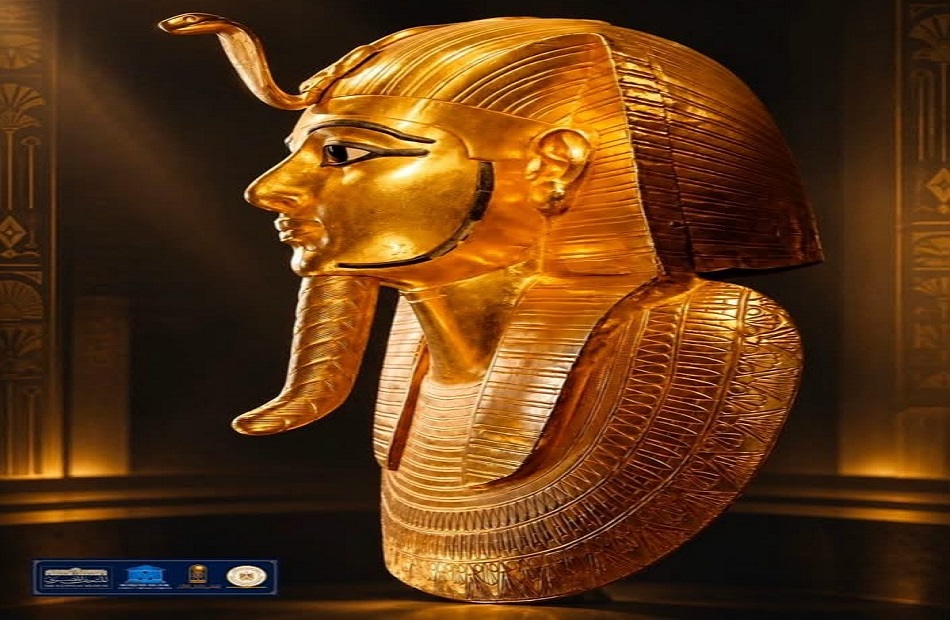
The Mask of King Psusennes I, housed at the Egyptian Museum in Tahrir Square, is one of the finest masterpieces of ancient Egyptian funerary art. It reflects the exceptional skill of ancient Egyptian craftsmen in goldsmithing and metalworking, as well as their precision in creating intricate details for royal burial objects.
Beyond its artistic value, the mask highlights the significance of gold in ancient Egyptian beliefs, where it was associated with divinity, eternity, and religious concepts of the afterlife and resurrection. Psusennes I belonged to the 21st Dynasty, which established Tanis in the eastern Nile Delta as an important royal center during the Third Intermediate Period. His funerary treasures provide valuable insights into the artistic traditions and royal burial practices of that era. The mask remains a testament to the achievements of ancient Egyptian civilization, combining artistic excellence with historical and religious significance and showcasing the craftsmanship that has endured for thousands of years.